phases of the moon pdf
Moon phases represent the varying ways the Moon appears from Earth, changing shapes as it orbits our planet․ These distinct forms are a captivating celestial display!
Understanding these cycles provides insight into the dynamic relationship between the Earth, the Moon, and the Sun, offering a fundamental aspect of astronomy․
What are Moon Phases?
Moon phases are the different ways the Moon appears to us on Earth throughout a month․ It’s crucial to understand the Moon doesn’t actually change shape; instead, we see varying illuminated portions as it orbits our planet․
These appearances, often described as shapes, are a result of the changing angles at which we view the Moon’s sunlit surface․ Imagine the Moon as a sphere, half of which is always lit by the Sun․ As it travels around Earth, the amount of this lit surface visible to us fluctuates, creating the phases we observe․
These phases aren’t merely visual curiosities; they’ve held cultural and practical significance for millennia, influencing calendars, agriculture, and even folklore․ The eight main phases offer a continuous cycle of change in the night sky․
Why Do Moon Phases Occur?
Moon phases arise from the interplay of three celestial bodies: the Sun, Earth, and the Moon․ The Moon doesn’t produce its own light; it reflects sunlight․ As the Moon orbits Earth, the amount of sunlit surface we see changes, creating the illusion of changing shapes․
This isn’t a change in the Moon’s physical form, but rather a shift in our perspective․ Half of the Moon is always illuminated by the Sun, but the portion visible to us depends on the relative positions of these three bodies․
The Moon’s orbit and Earth’s rotation are key factors․ The phases progress predictably as the Moon moves through its orbit, offering a continuous cycle of illumination and shadow․ This predictable pattern has been observed and documented for centuries․
The Eight Main Phases of the Moon
The Moon cycles through eight distinct phases: New Moon, Waxing Crescent, First Quarter, Waxing Gibbous, Full Moon, Waning Gibbous, Third Quarter, and Waning Crescent․
New Moon
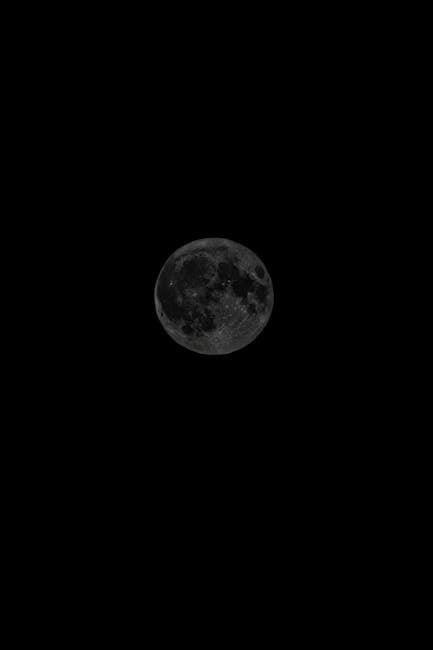
The New Moon marks the beginning of the lunar cycle, appearing as a dark, invisible orb in the night sky․ This phase occurs when the Moon is positioned between the Earth and the Sun, meaning the side facing us isn’t illuminated․
Although unseen, the New Moon holds significant cultural and astrological importance, often associated with new beginnings and fresh starts․ It’s a time for setting intentions and planting seeds for future growth․
Interestingly, while we can’t see the Moon during this phase, it’s still present and exerting its gravitational influence, contributing to tides․ The illumination percentage is at 0%, gradually increasing as the Moon moves along its orbit․
This phase is a subtle yet powerful reminder of the continuous cycle of change and renewal in the cosmos․
Waxing Crescent
The Waxing Crescent phase appears as a slender sliver of light, growing larger each night․ “Waxing” signifies that the illuminated portion is increasing, while “crescent” describes its curved, sickle-like shape․ This phase follows the New Moon and represents a period of growth and potential․
As the Moon moves away from the Sun in its orbit, more of its sunlit surface becomes visible from Earth․ The illumination percentage during this phase is between 1% and 49%, steadily climbing with each passing day․
Observing the Waxing Crescent often requires a clear, dark sky, as the faint light can be easily overshadowed․ It’s a beautiful reminder of the Moon’s gradual return to prominence in the night sky, symbolizing hope and new opportunities․
This delicate phase is a captivating sight for stargazers․
First Quarter
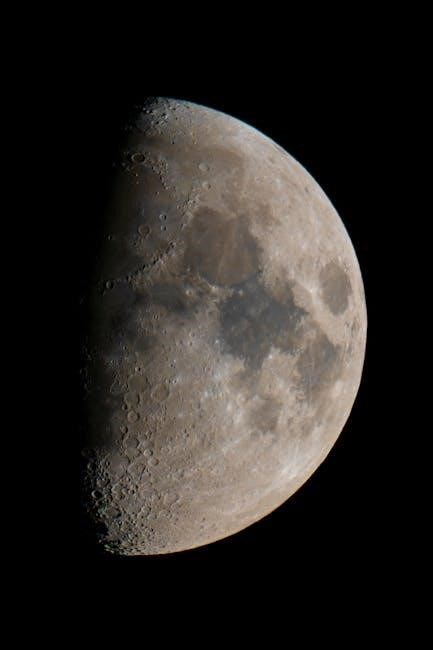
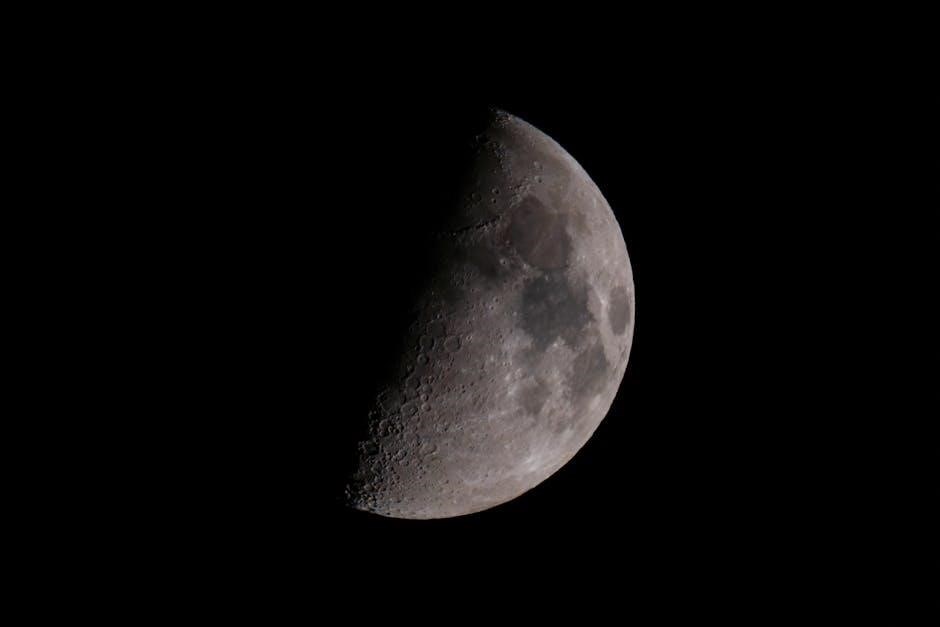
The First Quarter Moon marks a significant milestone in the lunar cycle, appearing as a half-illuminated circle in the night sky․ At this stage, exactly half of the Moon’s visible surface is lit by the Sun, resembling a perfect division between light and shadow․
This phase occurs approximately one week after the New Moon, as the Moon has completed roughly a quarter of its orbit around Earth․ It rises around noon and sets around midnight, making it visible for a substantial portion of the day and night․
The First Quarter Moon is a powerful symbol of balance and decision-making, representing a point where choices must be made and paths are clearly defined․ It’s an excellent time for focused action and setting intentions․
Observing this phase offers a clear view of lunar features․
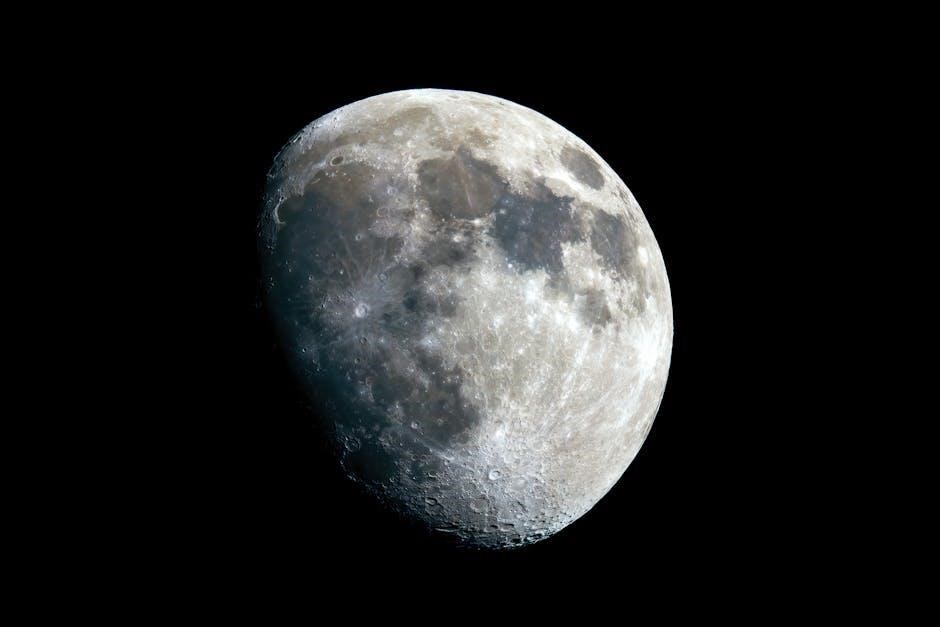
Waxing Gibbous
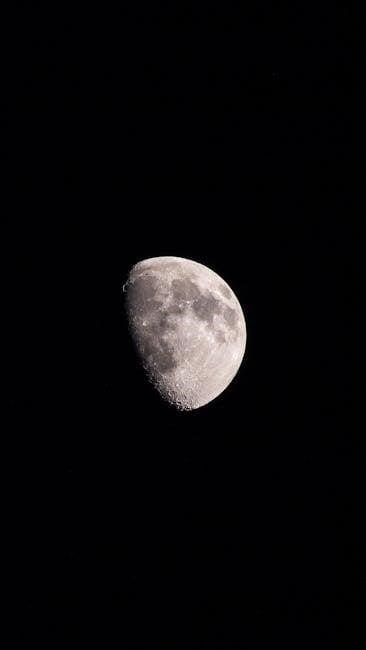
The Waxing Gibbous Moon follows the First Quarter phase and is characterized by more than half of its visible surface being illuminated․ “Gibbous” means bulging, and “waxing” indicates that the illuminated portion is increasing each night․
During this phase, the Moon rises in the afternoon and remains visible for most of the night, offering ample opportunity for observation․ The illuminated area continues to grow, steadily approaching the Full Moon․
This phase is a time of increasing energy and momentum, ideal for refining plans and building towards goals․ It’s a period of growth and expansion, where projects gain traction and progress becomes more visible․
The subtle shading reveals intricate lunar details․
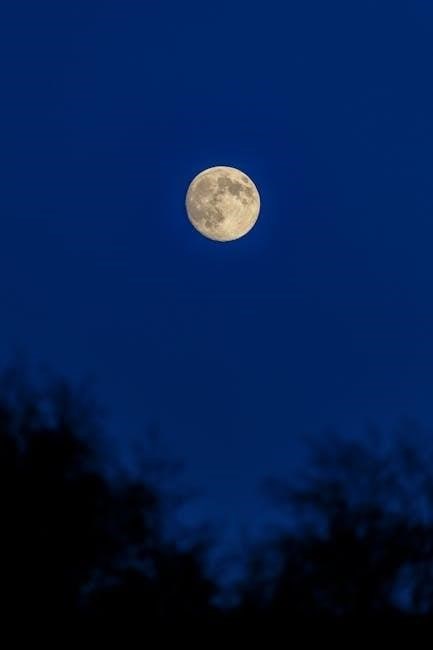
Full Moon
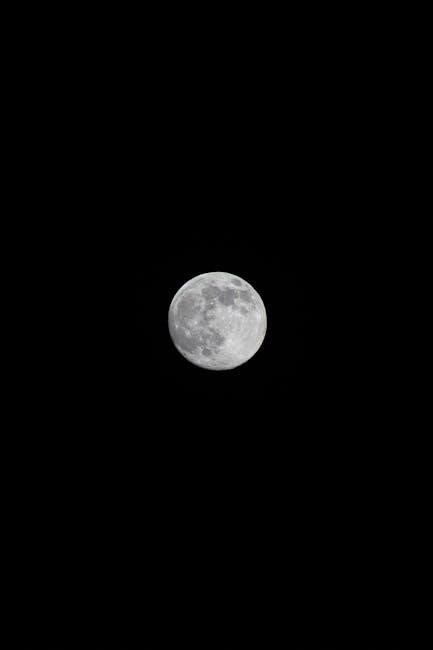
The Full Moon occurs when the Earth is positioned directly between the Sun and the Moon, fully illuminating the lunar surface as viewed from Earth․ This spectacular phase rises around sunset and sets around sunrise, gracing the night sky with its brilliance․
Culturally, the Full Moon has been associated with heightened emotions, increased energy, and transformative events throughout history․ Scientifically, it’s a prime time for observing lunar features due to optimal lighting conditions․
This phase represents culmination and completion, a time to celebrate achievements and release what no longer serves you․ It’s a powerful period for manifestation and bringing intentions to fruition․
The entire disc shines brightly, a beacon in the darkness․
Waning Gibbous
The Waning Gibbous phase follows the Full Moon, characterized by a decreasing illuminated surface․ While still largely lit, a noticeable shadow begins to creep across the lunar disc, signaling a shift towards darkness․
During this period, the Moon rises after sunset and sets before sunrise, remaining visible for a significant portion of the night․ It’s a time for reflection, integration, and releasing what no longer serves a purpose․
Energy levels naturally decrease as the Moon prepares for its New Moon rebirth․ This is an ideal time for introspection, letting go of old patterns, and preparing for new beginnings․
The illuminated portion continues to shrink each night, subtly changing the lunar appearance․
Third Quarter
The Third Quarter Moon, also known as the Last Quarter Moon, appears as a half-illuminated circle in the sky․ Exactly half of the Moon’s face is lit, while the other half remains in darkness, presenting a distinct visual marker․
This phase occurs approximately three weeks after the New Moon, marking a pivotal point in the lunar cycle․ It rises around midnight and sets around noon, offering visibility during the morning hours․
Traditionally, the Third Quarter represents a time of crisis, challenge, and decision-making․ It’s a period for evaluating progress, releasing obstacles, and preparing for the final descent into the New Moon․
It signifies a turning point, urging completion and letting go before a fresh start․
Waning Crescent
The Waning Crescent Moon is characterized by a shrinking sliver of light, appearing as a delicate curve in the early morning sky․ This phase follows the Third Quarter and precedes the New Moon, marking the final stage of the lunar cycle’s diminishing illumination․
Rising shortly before sunrise, the Waning Crescent is often visible just before the sun’s arrival, presenting a subtle yet beautiful sight․ Its illumination percentage continues to decrease daily, growing thinner with each passing night․
Symbolically, this phase represents release, surrender, and introspection․ It’s a time to let go of what no longer serves you, to rest, and to prepare for renewal during the upcoming New Moon․
It encourages quiet contemplation and acceptance of endings․
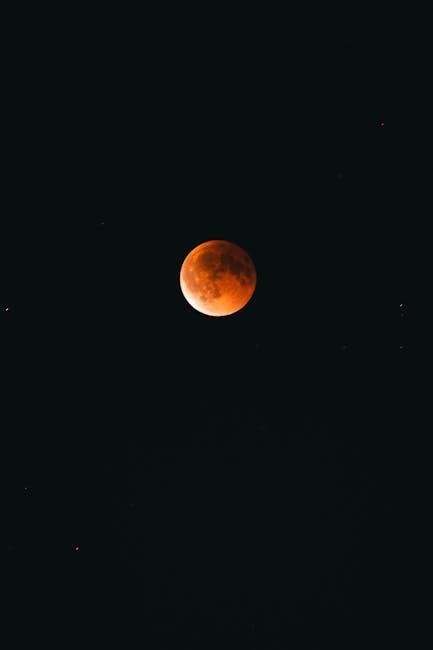
Understanding Illumination and Percentage
Illumination percentage reveals how much of the Moon is lit by the Sun, constantly changing up to 10% daily, defining each visible phase․
Illumination Percentage Explained
Illumination percentage is a crucial metric for understanding Moon phases, representing the proportion of the Moon’s surface visible from Earth that is illuminated by direct sunlight․ This isn’t about the Moon changing shape, but rather how much of its sunlit side we can see․
Expressed as a percentage, from 0% during a New Moon (completely dark) to 100% during a Full Moon (fully lit), it provides a quantitative measure of the phase․ The percentage fluctuates daily, increasing during waxing phases and decreasing during waning phases․ A 24% illumination, like on December 14th, 2025, signifies a specific point in the Waning Crescent phase․
This value is determined by the relative positions of the Sun, Earth, and Moon, offering a precise way to track the lunar cycle and predict the appearance of the Moon each night․
Daily Changes in Illumination
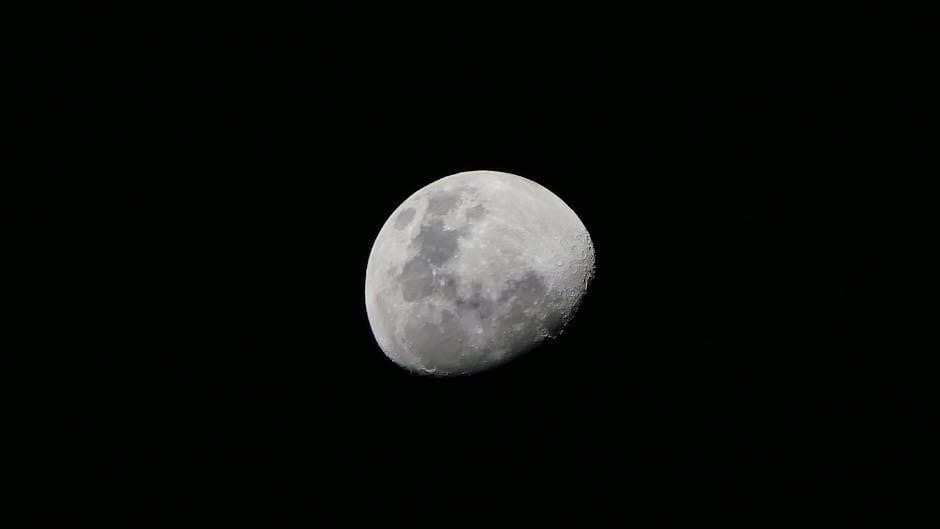
The Moon’s illumination doesn’t remain static; it undergoes continuous change, typically varying by up to 10% each day․ This dynamic shift is a direct consequence of the Moon’s orbital motion around Earth and its changing angle relative to the Sun․ As the Moon travels along its orbit, the amount of its sunlit surface visible to us steadily increases or decreases․
During waxing phases (New Moon to Full Moon), the illumination percentage rises, making the Moon appear progressively brighter and larger․ Conversely, during waning phases (Full Moon to New Moon), the illumination diminishes, causing the Moon to appear smaller and fainter․
Observing these daily alterations provides a tangible connection to the celestial mechanics governing our lunar companion, showcasing the ever-evolving nature of the night sky․
Detailed Look at Specific Phases
Each lunar phase—New, Crescent, Quarter, Gibbous, and Full—possesses unique characteristics and significance, influencing both cultural traditions and scientific understanding of our celestial neighbor․
The Significance of the New Moon Phase
The New Moon, often unseen from Earth, marks the beginning of the lunar cycle․ It occurs when the Moon is positioned between the Earth and the Sun, rendering the illuminated side facing away from our view․
Historically, the New Moon held immense cultural importance, often associated with new beginnings, fresh starts, and setting intentions․ Many cultures view it as a potent time for manifestation and spiritual practices․
Scientifically, the New Moon’s gravitational pull, combined with the Sun’s, creates higher tides known as spring tides․ This phase is crucial for astronomers as it provides the darkest skies, ideal for observing faint celestial objects․ It’s a time of potential, hidden energy, and the promise of illumination to come․
Characteristics of the Waxing Crescent Phase
The Waxing Crescent phase appears as a slender sliver of light, growing larger each night after the New Moon․ “Waxing” signifies that the illuminated portion is increasing, becoming more visible to observers on Earth․
This delicate crescent is best viewed shortly after sunset, hugging the western horizon․ It represents a period of growth and potential, symbolizing new projects taking shape and gaining momentum․
The illumination percentage during this phase is relatively small, typically ranging from 1% to just under 50%․ Observing the Waxing Crescent requires clear skies and a keen eye, as it’s a subtle yet beautiful reminder of the Moon’s continuous cycle․
Analyzing the First Quarter Moon
The First Quarter Moon marks a significant milestone in the lunar cycle, appearing as a perfectly halved circle in the night sky․ This phase occurs approximately one week after the New Moon, signifying that a quarter of the Moon’s surface is illuminated by the Sun․
Rising around noon and setting around midnight, the First Quarter Moon is prominently visible for much of the afternoon and evening․ It’s an excellent time for observing lunar craters and mountains with even a small telescope․
The illumination percentage reaches 50% during this phase, representing a balance between light and shadow․ This phase symbolizes decision-making and taking action, a point of clarity in the lunar journey․
Exploring the Waxing Gibbous Phase
The Waxing Gibbous Moon, following the First Quarter, presents a shape that is more than half, but not yet fully illuminated․ “Gibbous” signifies this bulging, almost-full appearance, steadily growing brighter each night as more of its surface reflects sunlight․
Rising in the afternoon and setting late into the night, this phase offers extended viewing opportunities․ It’s a fantastic time for observing subtle lunar features and enjoying the Moon’s increasing brilliance․
Illumination percentages range from 50% to 99% during this phase, representing a period of culmination and refinement before reaching the Full Moon․ This phase encourages reflection and anticipation․
The Full Moon: Cultural and Scientific Aspects
The Full Moon, a spectacular celestial event, occurs when the Earth is positioned directly between the Sun and the Moon, fully illuminating its surface․ Rising around sunset and setting with sunrise, it dominates the night sky with its brilliance․
Throughout history, the Full Moon has held immense cultural significance, inspiring myths, folklore, and religious practices across diverse societies․ It’s often associated with heightened emotions and increased activity․
Scientifically, the Full Moon causes slightly higher tides due to the combined gravitational pull of the Sun and Moon․ It also provides optimal conditions for observing lunar features, making it a favorite among astronomers․
Decoding the Waning Gibbous Phase
The Waning Gibbous phase follows the Full Moon, characterized by a decreasing, yet still mostly illuminated, lunar surface․ “Gibbous” signifies more than half of the Moon is visible, but the bright portion is shrinking nightly․
During this phase, observers can still enjoy a substantial amount of moonlight, though it gradually diminishes as the Moon progresses towards the Third Quarter․ It’s a visually striking phase, offering a beautiful view of lunar craters and maria․
The waning gibbous phase represents a transition, a slowing down of illumination, and a return towards darkness, marking a shift in the lunar cycle’s energy and appearance․
The Third Quarter Moon and its Visibility
The Third Quarter Moon, often called a half-moon, appears when half of the Moon’s illuminated side is visible from Earth․ This phase occurs approximately three weeks after the New Moon, marking the midpoint of its lunar cycle․
It rises around midnight and sets around noon, making it particularly well-suited for late-night or early-morning observation․ Unlike the First Quarter Moon, the illuminated portion is on the left side (in the Northern Hemisphere)․
Visibility is excellent, offering clear views of lunar features․ The Third Quarter Moon signifies a period of diminishing light, leading towards the Waning Crescent and ultimately, the New Moon․
Understanding the Waning Crescent Phase
The Waning Crescent is the final phase before the New Moon, appearing as a shrinking sliver of light in the early morning sky․ It rises after midnight and is visible just before sunrise, becoming increasingly thinner each day․
Illumination is less than 50%, with only a small portion of the Moon’s surface reflecting sunlight towards Earth․ This delicate crescent shape is often overlooked due to its proximity to the rising sun․
The Waning Crescent marks the end of the lunar cycle, symbolizing a time of release and introspection before the cycle begins anew with the New Moon․ Observing this phase requires a clear eastern horizon․
Moon Phase Calendars and Resources
Explore December 2025’s daily Moon phases with readily available calendars! Discover illumination percentages and track the Moon’s journey online for detailed insights․
December 2025 Moon Phases Calendar
The December 2025 Moon Phases Calendar provides a comprehensive view of the Moon’s cycle throughout the month․ As of today, December 16th, 2025, we are currently experiencing the Waning Crescent phase․ This calendar details each phase, allowing observers to track the Moon’s progression from New Moon to Full Moon and back again․
On December 14th, the Waning Crescent exhibited 24% illumination, meaning a quarter of the Moon’s visible surface was lit by the Sun․ Illumination changes daily, fluctuating up to 10% each day, showcasing the dynamic nature of the lunar cycle․ This calendar is an invaluable resource for astronomers, photographers, and anyone fascinated by the night sky, offering a clear and concise depiction of the Moon’s appearance each night of December 2025․
Finding Daily Moon Phase Information
For those eager to stay updated on the Moon’s daily phases, numerous online resources are readily available․ Beyond the December 2025 Moon Phases Calendar, several websites offer real-time data and future predictions․ These platforms detail the current phase, percentage of illumination, and even rise and set times for your specific location․
Accessing this information is simple – a quick internet search for “daily Moon phase” will yield a wealth of options․ These resources are particularly useful for planning nighttime activities like stargazing or photography, ensuring optimal viewing conditions․ Remember that the illumination percentage constantly shifts, changing by up to 10% daily, so checking frequently provides the most accurate insight into the Moon’s appearance․
Beyond the Basic Phases
Occasionally, the Moon presents rarer events like Blue Moons, Supermoons (appearing larger), and Micromoons (appearing smaller), adding to its celestial allure!
Blue Moons
A Blue Moon doesn’t actually appear blue in color! The term refers to an extra full Moon that appears in a month or a season․ Traditionally, a seasonal Blue Moon was the third full Moon in a season with four full Moons․
However, the more commonly known definition, popularized in the 20th century, defines a Blue Moon as the second full Moon within a single calendar month․ This occurs because the lunar cycle (approximately 29․5 days) is slightly shorter than most calendar months․
Blue Moons are relatively rare, occurring roughly every 2 to 3 years․ The next Blue Moon is anticipated to occur in May 2026, offering a beautiful and unique celestial sight for observers․
Supermoons
A Supermoon occurs when a full Moon coincides with the Moon’s closest approach to Earth in its orbit – a point known as perigee․ Because the Moon’s orbit isn’t perfectly circular, its distance from Earth varies throughout the month․
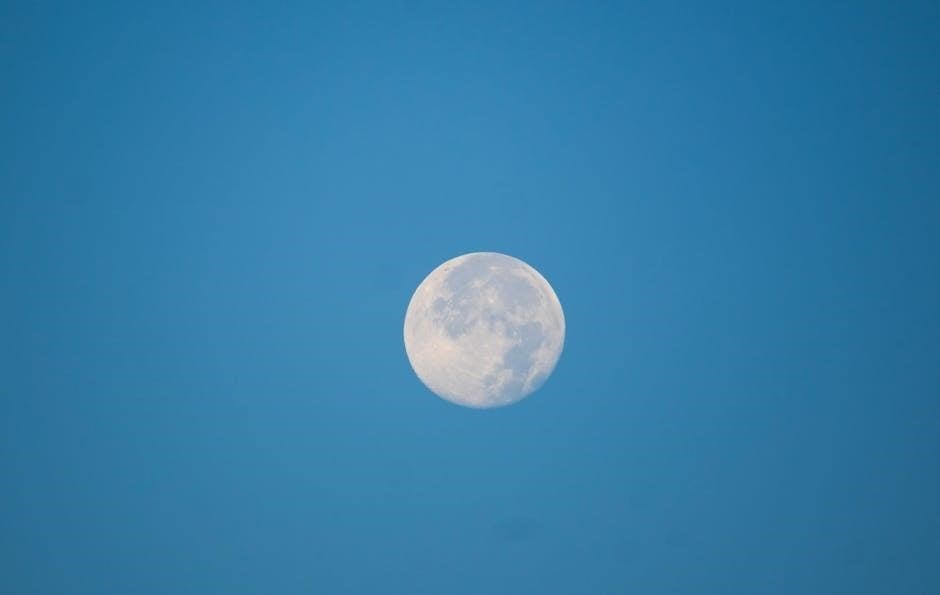
When a full Moon happens near perigee, it appears slightly larger and brighter in the sky than usual․ While the difference isn’t dramatically noticeable to the casual observer, it can be up to 14% larger and 30% brighter!
Supermoons are a captivating spectacle, often drawing attention from skywatchers and photographers․ Several Supermoons occur each year, providing frequent opportunities to witness this enhanced lunar display․
Micromoons
A Micromoon represents the opposite of a Supermoon; it occurs when a full Moon coincides with the Moon’s farthest point from Earth in its orbit – known as apogee․ Due to the elliptical nature of the Moon’s path, its distance fluctuates throughout the month․
When a full Moon aligns with apogee, it appears smaller and dimmer in the sky compared to an average full Moon․ It can be approximately 14% smaller and 30% dimmer than a Supermoon, though the difference is subtle to the naked eye․
Micromoons offer a unique perspective on the Moon’s varying appearance, highlighting the dynamic relationship between Earth and its natural satellite․ They provide a contrasting view to the more publicized Supermoons․
The Moon’s Orbit and Phases
The Moon’s orbit around Earth, combined with the Sun’s illumination, dictates the phases we observe, creating a continuous cycle of changing lunar appearances․
The Moon’s Orbital Path
The Moon doesn’t travel around Earth in a perfect circle; instead, its orbital path is an ellipse․ This means the distance between the Earth and the Moon varies throughout its orbit․
This elliptical path takes approximately 27․3 days to complete, which is known as the sidereal period․ However, because Earth is also moving around the Sun, the time it takes for the Moon to go through all its phases – the synodic period – is slightly longer, around 29․5 days․
As the Moon orbits, its position relative to the Sun and Earth constantly changes․ This changing geometry is the fundamental reason why we see different phases․ The Moon itself doesn’t produce light; it reflects sunlight, and the amount of illuminated surface we see depends on the angle at which we view it․
Relationship Between Orbit and Phase Appearance
The correlation between the Moon’s orbit and its phase appearance is direct and crucial․ As the Moon circles Earth, the amount of its sunlit side visible to us shifts․ When the Moon is between Earth and the Sun, we experience a New Moon – the side facing us is unlit․
As it moves along its orbit, more of the illuminated surface becomes visible, progressing through Waxing Crescent, First Quarter, and Waxing Gibbous phases․ When Earth is between the Moon and the Sun, we see a Full Moon․
Subsequently, the illuminated portion decreases, leading to Waning Gibbous, Third Quarter, and Waning Crescent phases, before returning to New Moon․ This continuous cycle demonstrates how orbital position dictates the perceived lunar phase․


You May Also Like

scarred alpha by norisha may pdf

hanuman chalisa pdf in sanskrit